
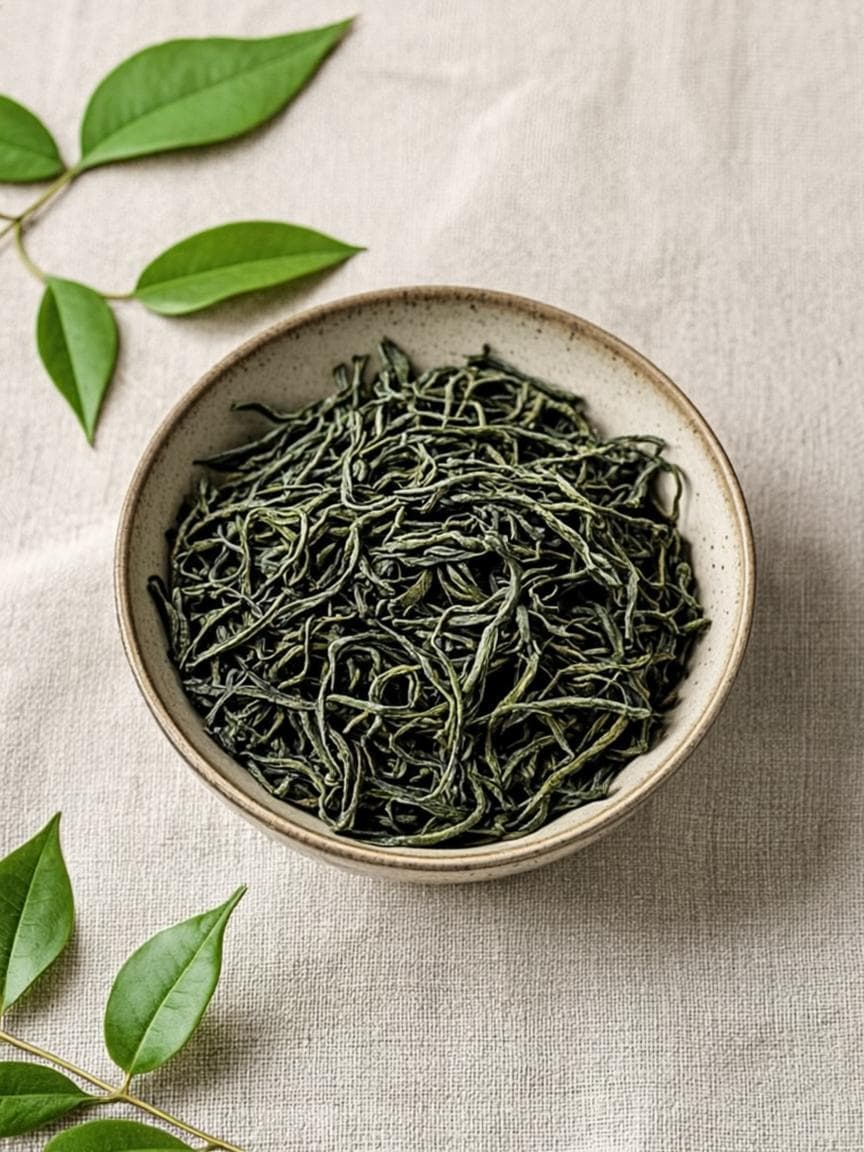
The southern slopes of the Dhauladhar range rise sharply from the valley floor, where tea gardens sit at elevations between 900 and 1,500 meters. The soil here is acidic and well-drained, constantly fed by the cold snowmelt of the Neugal River. According to historical records from the Tea Board of India, it was this distinct microclimate that prompted Dr. William Jameson, Superintendent of the Saharanpur Botanical Gardens, to survey the Kangra Valley in 1849. He established the area's first commercial nurseries at Holta near Palampur using Chinese seeds of Camellia sinensis var. sinensis, laying the groundwork for a regional style defined by slow growth and exceptional structural clarity.
The Phytochemical Legacy of High UV Exposure
The intense ultraviolet exposure characteristic of these sub-Himalayan elevations forces the tea bush to synthesize protective compounds. A CSIR-IHBT climate and soil analysis indicates that the combination of acidic mountain soil and high-altitude UV stress yields leaves with high concentrations of catechins, particularly epigallocatechin gallate (EGCG). These polyphenols serve as natural antioxidants, helping to protect plant tissues—and subsequently, the human body—from cellular oxidative stress. Because the cool mountain climate slows the leaf's development, these bitter and sweet compounds balance organically within the cell walls, resulting in a cup that offers complex vegetal sweetness alongside its physiological benefits.
The Pluck and the Pan: Crafting the Green Leaf
In the spring harvest, pluckers traverse the steep slopes to select the tenderest top two leaves and a bud. This rigorous hand-harvesting is crucial; older leaves contain fewer nutrients and more tough cellulose, which leads to a flat, astringent cup. The young shoots are rich in L-theanine, an amino acid that modulates the body's absorption of caffeine, supporting a calm, sustained state of mental clarity.
While many green teas, particularly Japanese varieties, rely on steam to halt the oxidation process, Kangra green tea utilizes a dry heat method. Freshly harvested leaves are pan-fired, a technique that predates modern mechanical processing in the valley. By subjecting the leaf to brief, direct heat in seasoned iron pans, the oxidative enzymes are deactivated while preserving the bright green chlorophyll. This dry-heat contact prevents the development of the damp, sea-grassy profiles typical of steamed teas. Instead, it coaxes out subtle toasted notes, reminiscent of sunflower seeds and sweet hay, which temper the fresh, raw character of the spring leaf.
The Mechanics of Thermal Extraction
Extracting the delicate balance of catechins and volatile aromatic compounds requires precise thermal control. Boiling water is too aggressive; it ruptures the leaf cells too quickly, releasing excess tannins that result in an overly bitter brew. To capture the vegetal sweetness without the harshness, the water must be allowed to cool.
Measure 2 grams of loose-leaf green tea for every 200 milliliters of water. Heat the water to between 75°C and 80°C—a temperature easily identified when the first small bubbles begin to rise from the bottom of the kettle. Pour the water gently over the leaves and steep for two to three minutes. A shorter steep highlights the bright, floral top notes, while a full three minutes coaxes out more body and a deeper, golden-green liquor. The tea is best enjoyed plain, allowing the clean, mineral-rich finish of the Dhauladhar terroir to show through clearly.
commercial nurseries at Holta near Palampur
Key Takeaways
- Kangra green tea is grown at altitudes between 900 and 1,500 metres in the Dhauladhar range, where acidic soil and cool temperatures support slow leaf development.
- High ultraviolet exposure at these sub-Himalayan elevations prompts the leaves to produce high levels of catechins, including EGCG, which act as natural antioxidants.
- The tea is crafted using a traditional pan-firing dry-heat method that preserves chlorophyll while imparting toasted notes of sweet hay and sunflower seeds.
- To brew the perfect cup, steep 2 grams of loose-leaf tea in 200 millilitres of water heated to 75°C–80°C for two to three minutes.
FAQs
How should these delicate green tea leaves be stored to preserve their flavor?
Keep the dry leaves in an airtight, opaque tin stored in a cool, dark cupboard away from strong-smelling kitchen spices. Because these leaves are minimally oxidized, they retain their optimal flavour profile for about 12 to 18 months from the harvest date. If the leaves lose their sweet, grassy aroma or turn a dull, dusty brown, they have likely degraded from exposure to air or moisture.
Does the flavor of the tea change during different harvest seasons?
While the spring flush produces the most delicate cup, the valley also yields distinct summer and autumn harvests. Summer leaves experience faster growth under stronger sun, resulting in a bolder body and deeper gold liquor. Autumn harvests offer a much mellower, woody profile, making them ideal for those who prefer a highly rounded, low-astringency brew.
What role does this tea play in the local heritage of Himachal Pradesh?
In the Pahari households of the Dhauladhar foothills, serving freshly brewed tea is a foundational gesture of hospitality. Known locally as *cha*, it is traditionally offered to guests alongside regional treats like *babru*, which are sweet, deep-fried wheat patties. This daily ritual reflects a deep-seated cultural emphasis on warmth and community connection in the cold mountain terrain.
Why does the mineral content of your brewing water matter?
The mineral composition of your brewing water directly affects how the tea compounds dissolve. Highly alkaline or hard water containing heavy calcium and magnesium ions prevents the delicate catechins from fully extracting, leading to a dull, cloudy brew. Using filtered, neutral-pH water allows the natural sweetness and bright mountain minerals of the leaf to emerge cleanly.
Can the same portion of loose leaves be brewed multiple times?
High-quality, whole-leaf harvests can be steeped up to three times. Gently increase the brewing time by 30 seconds for each subsequent infusion to draw out the deeper, slower-releasing sugars. The second steep often reveals a rounder, sweeter profile as the rolled leaves have fully unfurled.


